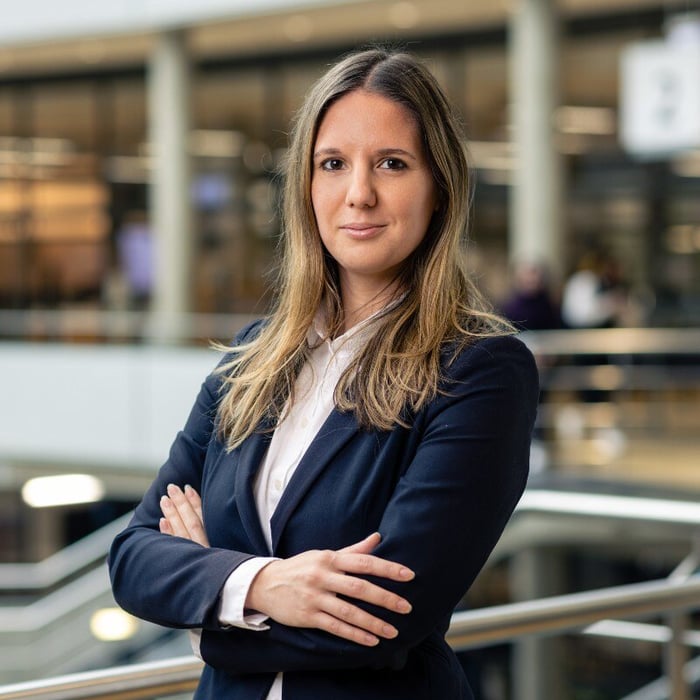
Dr. Agota Szabo is a distinguished expert in leadership and governance, with many years of experience in both academia and practice. She currently teaches in the MBA in Leadership in Sustainability and also serves as a Leadership & Board Governance Researcher.
I do not know many leaders who feel completely comfortable with decision-making right now. Not because they do not know what they are doing, but because the context has changed. Decisions used to be complicated. Now they are visible to many, political, and often urgent at the same time. You are expected to move fast, involve the right people, keep things transparent, and somehow still land on solid ground. That is a lot to do in one process.
What I see happening quite often is this: people either slow down too much in the name of inclusiveness, or they push through too quickly and deal with resistance afterwards. Neither really works. What does seem to work is accepting that clarity does not come first. That is probably the biggest shift. In complex situations, you do not wait until everything makes sense, you create just enough structure to move forward. For me, that usually starts with a very simple question that turns out not to be simple at all: what is the actual decision here? You would be surprised how often that’s still vague. Are we deciding direction? Budget? Timing? Ownership? If that is not clear, everything that follows gets blurry too. Once that is sharp, things get easier.
Decision-making right now is less about control and more about navigation
Then you also need to keep thinking about the stakeholders part, where most decisions either gain traction or quietly fall apart. In public organizations especially, people are not just involved. They have stakes, opinions, and influence. Ignoring that does not make it go away. But over-involving everyone in everything does not help either. It becomes a bit of a judgment call every time: who really needs to be part of this, and at what moment? What I have learned is that timing matters as much as inclusion. Bring people in too late and they resist. Bring them in too early without clarity, and you get a lot of noise instead of input. There is no perfect formula here but being explicit about the process helps. Saying: this is where we are, this is what we are deciding, this is how your input fits in. That alone reduces a lot of questions.
Another thing that plays a bigger role than we like to admit: pressure. Political pressure, leadership style, personal preferences, it is always there. The tricky part is that it rarely shows up as pressure. It feels like common sense, urgency, or “this is how we usually do things.” Until you take a step back and realize it is shaping your decision more than you intended. I try to force a bit of reflection into every important process. Even small questions help: are we rushing this? Are we missing a perspective? Would we decide differently in another setting?
You do not need a full analysis, just enough to avoid blind spots. And then comes the part that is often underestimated: what happens after the decision. Because making the decision is one thing. Getting people to move with it is something else entirely. If people do not understand the reasoning, or what it means for them, or what they are supposed to do next, it stalls. Not dramatically, but quietly, and that is sometimes worse. Over time, I have become more conscious about that piece. Not over-explaining but making sure the core is clear: this is the decision, this is why it matters, and this is what happens next. Simple, but not always easy to do under time pressure. At the same time, I have stopped seeing decisions as final in the traditional sense. In complex environments, they rarely are. You move, you learn and you adjust. That does not mean being vague or non-committal, it means having a clear direction without being rigid.
To sum up, decision-making right now is less about control and more about navigation. You do not get perfect conditions, full alignment or certainty. What you can do is create enough clarity to act, involve the right people without losing momentum, and stay aware of what is influencing you along the way. It is not clean or linear, but that’s exactly the reality we live in.
De Kracht van een goed bestuur: leiderschap in een dynamische wereld